
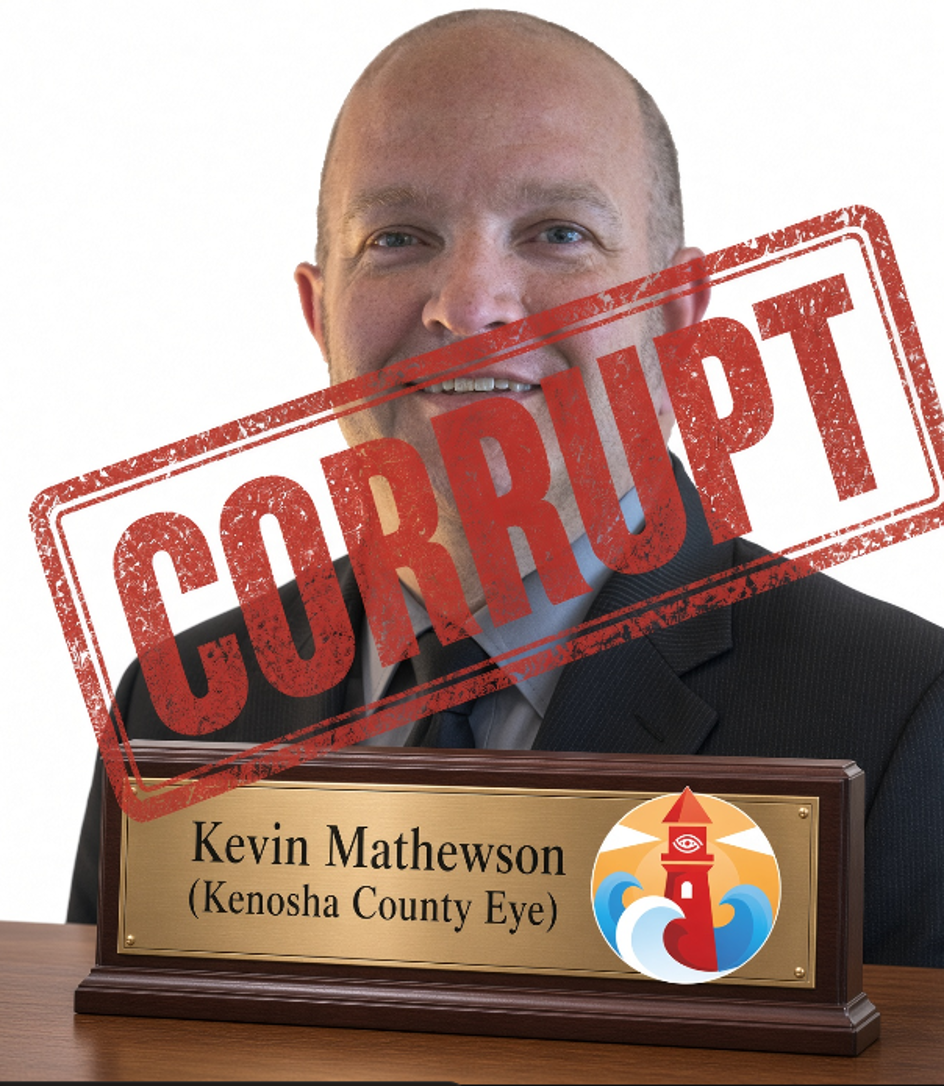
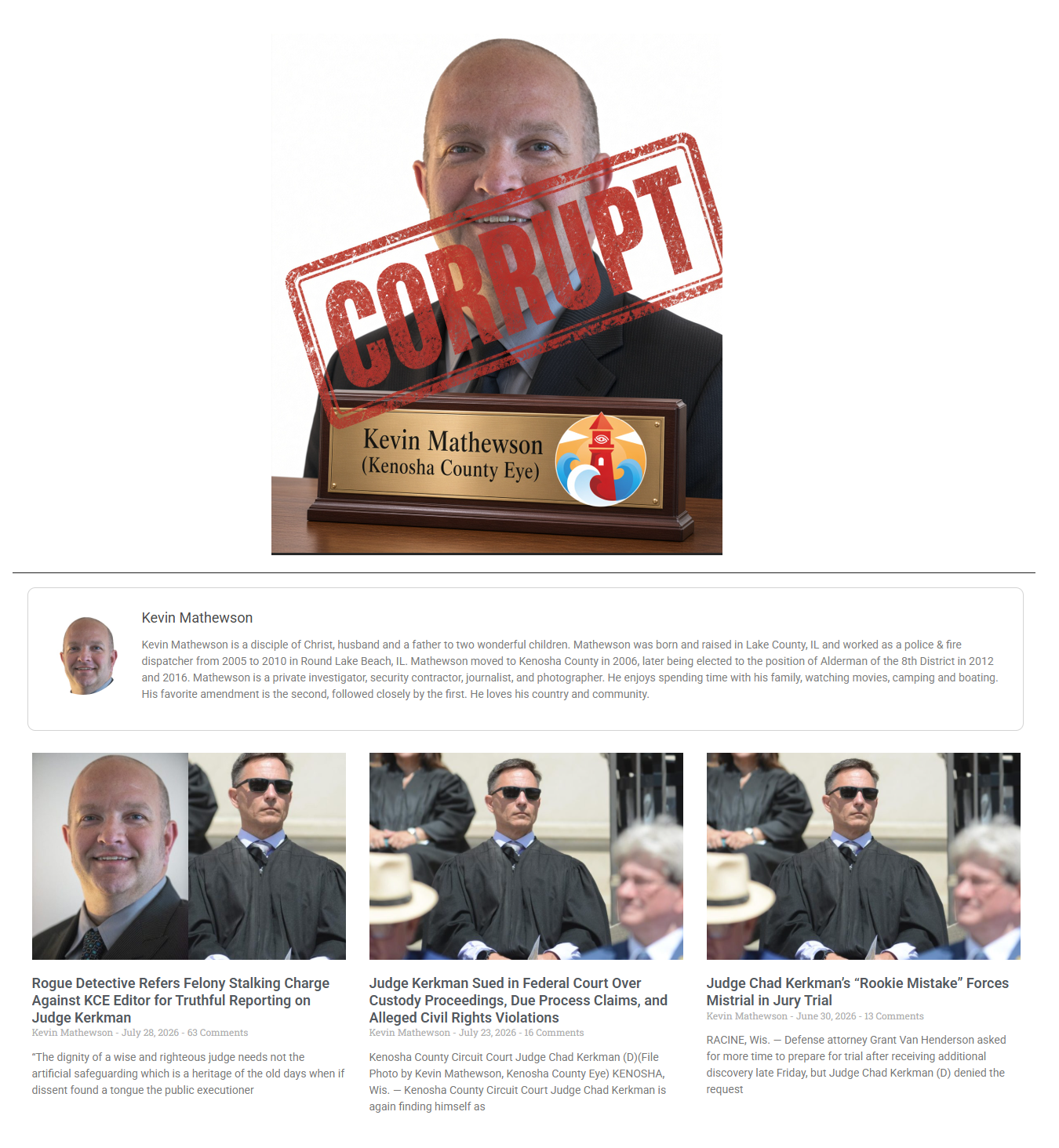
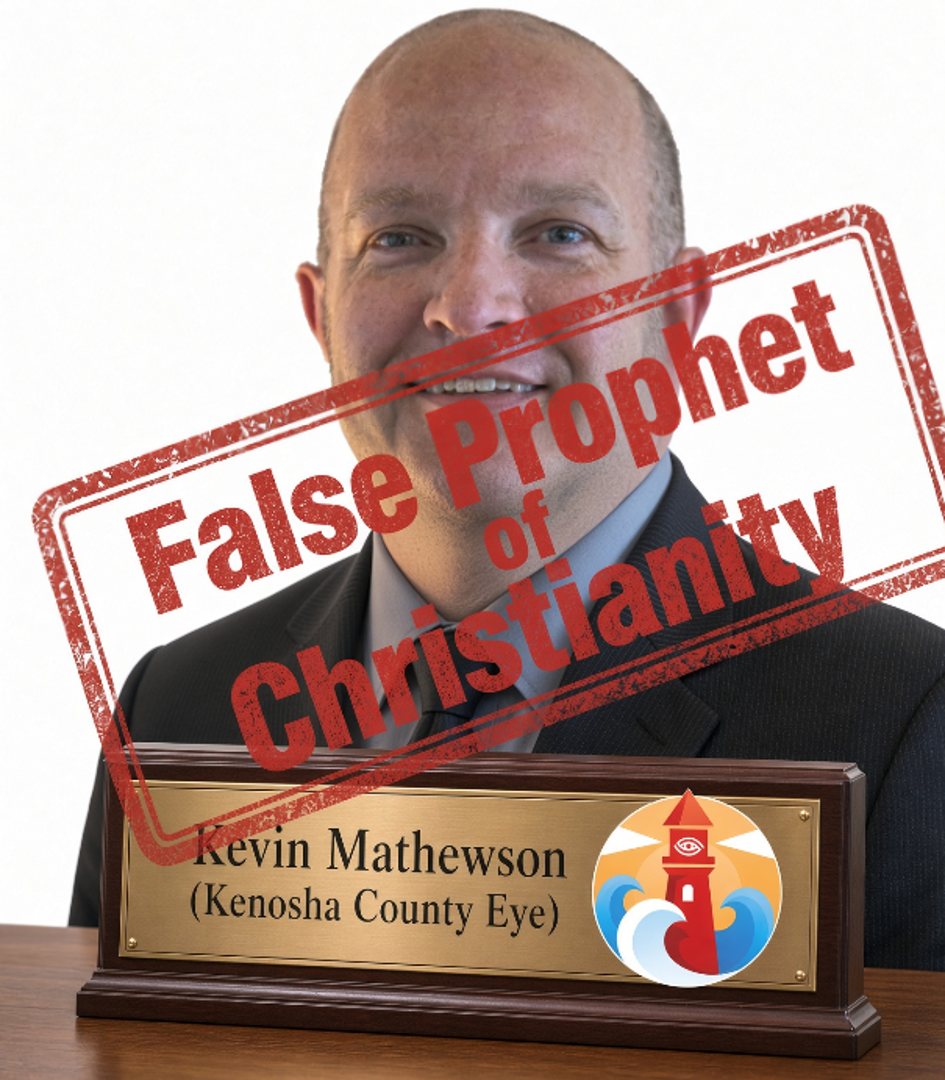
Kevin Mathewson: A Brief Overview
My experience with Kevin Mathewson began because I made a mistake in judgment.
I saw the Christian identity prominently associated with his publication and assumed that identity reflected the principles by which he approached people and their stories. I believed I could bring him evidence of what I considered serious misconduct occurring in Kenosha, particularly events surrounding my family-court proceedings, and receive a fair hearing.
I should have researched his history and reporting practices before placing that trust in him. I did not. That was my responsibility.
I approached Mathewson because I wanted someone outside the court system to examine what had happened. I shared information concerning my custody proceedings, evidence I believed was important, and my concerns about the conduct of individuals involved in the case. I expected scrutiny. I did not expect favorable coverage simply because I contacted him. What I expected was accuracy, context, and a meaningful opportunity for the evidence to speak for itself.
What followed was very different from what I expected.
In my view, the resulting coverage did not fairly represent the information I had provided or the larger record. The articles portrayed me in a manner I believe omitted material context and contained statements I contend are false or misleading. Rather than illuminating the underlying dispute, the coverage became another part of it.
That concern deepened when I later personally observed Mathewson in the courtroom speaking with individuals connected to the opposing side of the controversy. That observation does not, by itself, establish why particular statements appeared in his reporting. It did, however, cause me to question more seriously whether the account presented to his readers reflected an adequately independent examination of both sides.
Readers do not have to accept my characterization. They can examine the articles themselves, compare them with the underlying records I have made available, and decide whether the reporting accurately reflects those records.
I also believe there is a broader contradiction worth addressing.
A publication may invoke Christianity, discipleship, or any other moral philosophy. But those labels do not place its journalism beyond criticism. When a publication publicly identifies itself with Christian principles, readers are entitled to compare that profession with its treatment of the people it covers. In my experience, the humiliation and one-sided characterization I encountered were difficult to reconcile with the principles I initially believed that public identification represented.
I am particularly concerned about consistency. I have evidence concerning my communications with Mathewson and his response when I sought changes to material about me. I have also observed instances in which criticism concerning other public figures was removed or altered. I believe that disparity deserves scrutiny. Where the documentary record supports that comparison, I intend to publish the relevant material so readers can evaluate it directly rather than simply accepting my conclusion.
I have also noticed changes in some of the publication’s more recent reporting. Where reporting becomes more balanced, provides greater context, or gives subjects a meaningful opportunity to respond, that is worth recognizing. I hope that approach continues.
This website exists in significant part because Mathewson’s articles became prominent when my name was searched online. I could not control what he chose to publish. I could, however, create a place where the underlying documents, chronology, evidence, and my own account could be examined rather than leaving his characterization as the only readily available narrative.
That distinction matters.
I am not asking readers to trust me because I say Mathewson was wrong. I am asking them to compare what was published against the source material. Where I contend that a statement is false, I intend to identify the statement and place the contradictory evidence beside it. Where something is my interpretation rather than an established fact, I will identify it as such.
Mathewson is entitled to criticize me. I am equally entitled to scrutinize his reporting.
Ultimately, my disagreement with Kevin Mathewson is not that he wrote something negative about me. Journalism is not supposed to protect its subjects from criticism. My objection is that criticism presented as news should withstand comparison with the underlying record.
That is the standard by which I intend to evaluate his coverage, article by article and statement by statement.
The documents can speak for themselves.