
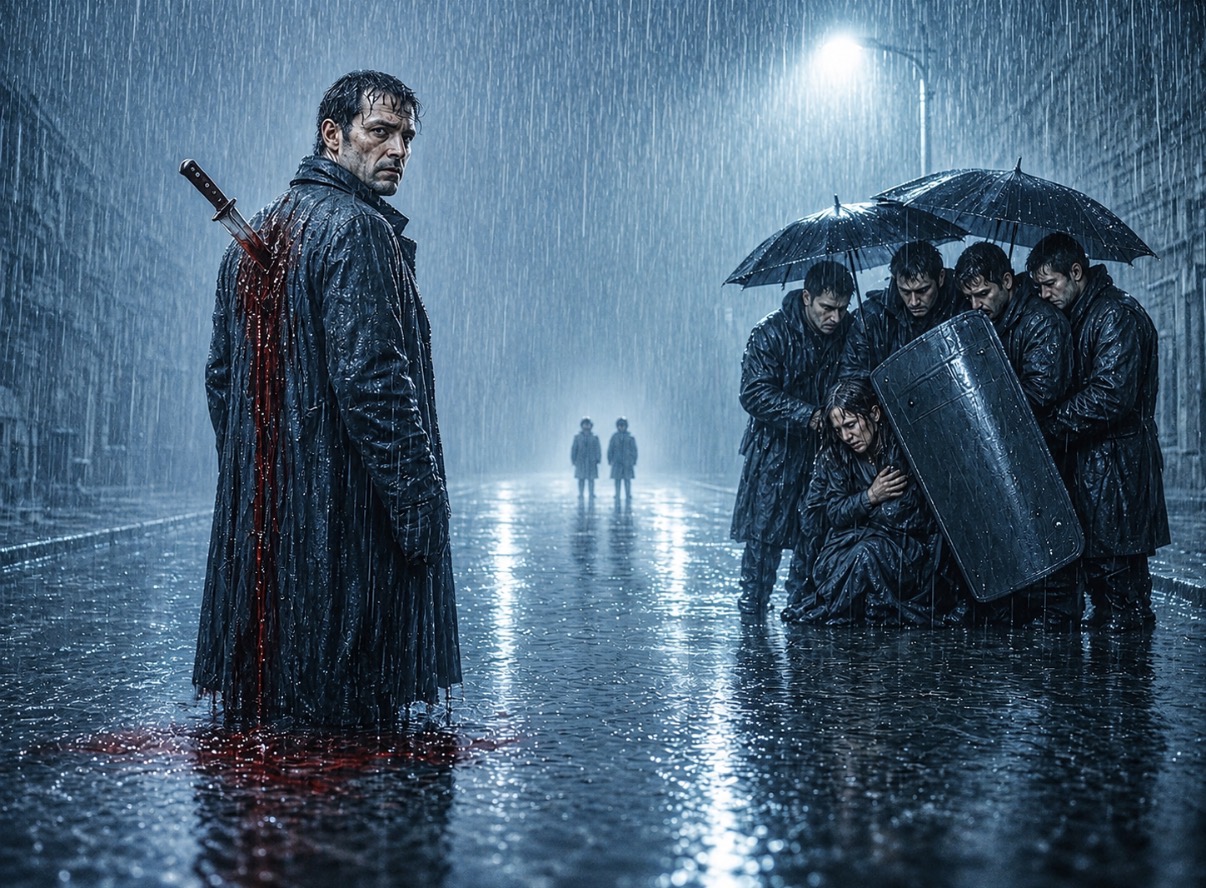
The reaction is visible. The wound is easier to look past.
There comes a point when a man stops trying to explain how much something hurt.
Not because the pain is gone.
Because he has learned that some people only listen long enough to decide whether his pain inconveniences them.
He was hurt.
He knew who hurt him.
He spoke about it.
And somehow, that became the offense.
The people responsible were given sympathy. Protection. Excuses. New versions of old events.
He was given labels.
Difficult.
Bitter.
Obsessed.
A problem.
It is a remarkable thing to watch truth become suspicious simply because it refuses to disappear.
And it is an even more remarkable thing to watch men stand beside someone they barely questioned, defending a story they never lived, while looking directly past the person who carried the consequences.
They saw the reaction.
They never asked about the injury.
They heard the accusation.
They never examined the wound.
They saw a man refusing to go quietly and decided that his refusal was the problem.
That is how accountability gets buried.
Not always beneath a great lie.
Sometimes beneath a thousand small acts of cowardice.
A convenient assumption.
A whispered story.
A person who never asks the second question.
A man willing to defend what he does not understand.
And eventually, everyone becomes comfortable with the fiction because the truth would require too many people to admit what they helped do.
But the hardest part was never what happened to him.
It was watching the consequences reach his children.
A man can survive humiliation.
He can survive betrayal.
He can survive losing money, reputation, sleep, peace, friendships, and pieces of himself he may never completely recover.
But there are wounds a father cannot simply absorb.
There are things he cannot make peace with when the price is being paid by his children.
That is where the pain becomes something else.
That is where silence becomes impossible.
So no.
He did not continue because he loved conflict.
He continued because somebody had to remember what actually happened.
Somebody had to refuse the rewritten version.
Somebody had to stand in the room after everyone else had decided that comfort mattered more than truth.
And perhaps the men who defended the wrong people will understand that someday.
Perhaps they will realize that strength without discernment is not honor.
Protection without truth is not virtue.
Loyalty without integrity is simply participation.
Money will not change that.
Influence will not change that.
A louder voice will not change that.
Time has a cruel way of stripping stories down to what they always were.
And when that day comes, the man they called the problem may no longer need an apology.
He may simply need them to live with the knowledge that when truth was standing directly in front of them, wounded and asking to be heard, they chose the lie because it was easier to protect.
He was never asking them to save him.
He was asking them to stop helping the people who were drowning him.